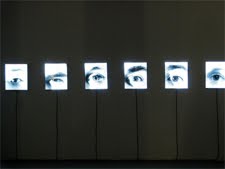
Whenever I start feeling badly about how hedonistic the 1997 "Aspen" chapter of my book sounds, I watch this video and smile and think, "Aaah, the good old days!"
Man! Sometimes I wish I could just live in ignorant '90s bliss all over again back when I thought "Internet" was a female intern, "China" just those dishes we never used, "Bin Laden" an instant soup, the "Iraq War" a three month war with only 300 US casualties, and "Global Warming" a trendy book by Al Gore (and an easy elective class at Boulder). How the times have changed.
I know scenes like the one in the video below still happen every night all over the country, but when we were partying back in the '90s it didn't feel like guiltily eating the last slice of the pie while the house was on fire. Illusion or not, partying in the '90s felt more like savoring the first, tiny piece of budget-surplus-solesuperpower-berry pie right after it came out of the oven and being perfectly happy to leave the rest for everybody else. Amazing, how fast we ate it all.
For a glimpse of what the world was like when youthful self-destruction was still considered a phase, I give you an unusually calm night with the Brian Jonestown Massacre:
Discovering Poetry through TV: The Erl-King by Johann Wolfgang Von Goethe
I guess I shouldn't be embarrassed that an increasing number of my cultural references are coming from television these days, like the following poem by Johann Wolfgang von Goethe that I picked up from Boardwalk Empire, because the writers behind these shows are so knowledgeable and talented that I'd be honored to pick any one of their brains for books, playlists, etc. In fact, I will admit that I've been adding a lot of songs to my iPod from Boardwalk Empire, Breaking Bad, True Blood, etc. And these are not just lowly pop songs - I discovered 19th century cellist Pablo Casals from Boardwalk the other day and downloaded his Bach Cello Suites which are beautifully haunting in their sparsity and sound really good turned way up.

American Finalist on "Arabs Got Talent"
Picked this story up off CNN so no secret here, but I was just blown away by this 23 year old girl from Boston who doesn't even speak Arabic fluently singing a song by the legendary Egyptian singer Umm Kulthum. I remember hearing Kulthum's sorrowful, soaring voice in the Souk during Ramadan in Cairo and being so mesmerized by it that I bought a cassette tape of her music right there on the spot. I hadn't thought of Kulthum in a long time, but seeing this video brought that memory flooding back and chills to my spine. This American girl is so talented its mind blowing… and the scene of her standing before the baffled Arabic judges who have no idea what is about to come pouring out of this white girl's soul and then the transformation as they listen - the joy on their faces - is just wondrous. Hope you enjoy it as much as I did. And go Jennifer! I hope you win the whole contest!
LA Love Letter

What's In an Image? In "Defense" of the New Yorker magazine
 This photo headlines an article in this week's (Sept. 9, 2013) New Yorker magazine titled "The Return". It explores the challenges soldiers face upon their return to civilian society after multiple tours in Iraq and Afghanistan, after years in an alternate universe of war. They can't just flip a switch and compartmentalize that very different reality and, sadly, because we are so removed as a society from the wars we wage, they can't share it with us here at home. We simply don't understand.
 I love the New Yorker for many different reasons. Stories like these chief among them. Of course I love the artwork too (and, yes, the cartoons). Even if you didn't read this story, the picture alone makes you think. You could probably guess the content of the article from the picture. Or you might guess that it is about the American economy wearing one of its many "hats"... propped up in a large part by the $500 billion defense industry. Or maybe you would think it is about how guarded we feel as citizens in an increasingly armed society where our friends and family, our children are regularly gunned down in schools, malls, movie theaters and military bases.
Or it could be about the New Yorker itself and the state of emergency in the journalism industry, fighting to survive the tsunami of the internet, the dilution of advertising dollars and, more importantly, the dilution of facts.
I hope the New Yorker is able to win this battle because I don't want to live in a world without pictures and stories like this that remind me every day to think outside the comfort of my local reality and opinions. Maybe a dose of well reported perspective every day will allow us to understand each other a little better, take off our helmets and lower our guns and act and live with empathy, compassion and intelligence.

Book Excerpt from Robert Penn Warren's All The King's Men
Living in the late age of the Interstate Highway system and Flying J Truckstops with Mickey D's and Bob's Big Boy and signs for a Cracker Barrel every fifty miles in the South and Midwest. Living in the dawn of the electric car with plug ins at Whole Foods for the Prius people with their canvas shopping bags and yoga pants, it's hard to even imagine the world of Robert Penn Warren's All The King's Men, the world of American Graffiti, back when the automobile was a novelty, when cruising the "strips" of small town America in loud gas guzzlers was the favorite national pastime, when drive ins were really drive-ins: burger joints with food served on window trays, movie theaters with great flashing screens lighting up the night for miles and liquor stores where they'd pop the cap on your forty, pass it through your driver's window and wish you a good evening.
It's even hard to imagine the novelty of the road itself - the smooth, black slab cutting through the fields and forests like a gun shot blowing through everything in its path. The interstates blasted right through the center of sleepy old towns, the church steeples hidden now behind billboards and exit signs, the old silence now filled with a persistent surf-like hum of vulcanized rubber on asphalt and the occasional grind of sixteen wheelers downshifting and the bang of their enormous loads crashing over potholes.


Transit of Venus
June 5, 2012 |
| ...OK, not the transit itself, but three dorks watching it with "solar viewing glasses." |


What Hurricane? Just another surfing day.
Ditch Plains, Montauk, NY
Friday August 26, 2011
Friday August 26, 2011

click on image to enlarge


Going Low - A Journey into the Heart of South Carolina's Low Country; Spring 2010
 Right after you pass the steaming Volcano, the one with kids running around on it, waving putters above their heads like little Lords of the Flies. Right after the window full of beach balls and boogie boards that looks like an oversized gumball machine and the giant, neon crab blinking his claws at you… Route 17 South suddenly goes dark. This is the beginning of Brookgreen Gardens State Park - nine thousand acres of forest, meadows and gardens that act as a buffer - a sort of demilitarized zone - between the tacky, plastic free-for-all of Myrtle Beach and the quiet, natural magic of the South Carolina Low Country.


One in 8 Million

Click here or on the image to see New York through Patrick Harris' eyes


Haiku by Denice Cacace
from Spirit Fish - Voices of the South Coast
choppy lines
pulse across the water -
wind writing
through the window crack
a chickadee calls
light is coming, is coming
on easy curl of wind
a black hawk floats
counting salmon
*I found these Haiku in a collection of essays and poems by writers from Oregon's South Coast. The thing that immediately struck me about these Haiku was how the third or "punch" line added so much color and meaning to the first two lines and what a thrill it was to read these lines in order and discover their full meaning sequentially.
For example, we've all seen hawks floating on the wind, but the words "counting salmon" suddenly paint the entire picture... they add a river and trees, they give the bird's flight focus and posture, they link the bird to its environment and even suggest our link to the greater environment. The chickadees's voice comes to life lyrically in the words "light is coming, is coming" and those words also paint the predawn outside the window, morning chill and all. And the choppy lines in the first Haiku could have been from a boat, they could have been ocean surf, but the word's "wind writing" turn them into ripples on a lake. Beautiful.
from Spirit Fish - Voices of the South Coast
choppy lines
pulse across the water -
wind writing
through the window crack
a chickadee calls
light is coming, is coming
on easy curl of wind
a black hawk floats
counting salmon
*I found these Haiku in a collection of essays and poems by writers from Oregon's South Coast. The thing that immediately struck me about these Haiku was how the third or "punch" line added so much color and meaning to the first two lines and what a thrill it was to read these lines in order and discover their full meaning sequentially.
For example, we've all seen hawks floating on the wind, but the words "counting salmon" suddenly paint the entire picture... they add a river and trees, they give the bird's flight focus and posture, they link the bird to its environment and even suggest our link to the greater environment. The chickadees's voice comes to life lyrically in the words "light is coming, is coming" and those words also paint the predawn outside the window, morning chill and all. And the choppy lines in the first Haiku could have been from a boat, they could have been ocean surf, but the word's "wind writing" turn them into ripples on a lake. Beautiful.
Impressions of The Badlands, Black Hills and Little Bighorn; Summer 2010


What's in an Image?

I love looking at an image and not knowing what it is at first, then discovering what it is and marveling at the details, the components and mechanics, that comprise the thing itself but seem so odd when seen from a different perspective, like this picture of...
Fifteen Unforgettable Movie Moments
(a collection of essays from Salon)
(a collection of essays from Salon)

Theater unknown (Times Square), New York City
I'm only guessing in saying that the evening began with Popeye's fried chicken and Budweiser, but it's a good guess. In the long-gone days when Times Square was decrepit, dangerous and ringed with cockroach-infested, odoriferous theaters showing all grades of violent or pornographic cinema, my best friend and I made numerous opening-night pilgrimages there, mostly for horror films. The degree of talk-back and the atmosphere of incipient danger made almost every Times Square viewing experience memorable, but none stands out as clearly as watching John Carpenter's "The Thing," which was both an early-'80s special-effects landmark and also one of the tensest, most electrified horror movies of that era.
If the original 1951 "Thing From Another World" is largely understood as Cold War allegory, it'd be stretching a point to sense a political motivation in Carpenter's remake (despite his clear leftist leanings in other films). But it's ominous, claustrophobic, wintry and scary as shit — all leading up to that incredibly tense scene when the trapped Antarctic scientists agree to undergo blood tests with a live electric wire, to determine which of them is the eponymous shape-shifting alien. The packed, rowdy, half-drunken audience had fallen dead silent as the test moved from one blood sample to another, until a big guy in the last row stood up, pointed at the screen, and announced in a booming voice: "That dude is the motherfuckin' Thing! I bet you a million dollars!"
Well, he was right, of course, and we all fell apart laughing and it was some time before order was restored. I'm not saying I want that level of interactivity at every movie, but somehow the guy hadn't ruined the movie or the scene or the whole experience, not at all. He had just kicked it up to another level. We can talk a lot about the communal moviegoing experience and the emotional and psychological effect of cinema and the way people become immersed in it while maintaining a critical or analytical distance. But for me that moment is like Zen lightning — it explains it all, without explaining anything.
— Andrew O'Hehir
Read more Unforgettable Movie Moments at Salon

Eward Abbey could be called a naturalist, but I don't think that's a rough enough sounding description for him. I don't think he ever pressed a flower into his journal. I doubt he ever collected rocks. He was content to explore the earth and leave it as he found it. And if he found it paved he was content to throw a beer can out his car window because, as he'd say, it's already ruined.
He fantasized about blowing up the Glen Canyon Dam, the massive piece of industrial violence that caused the flooding of the Colorado river, forming what is now known as Lake Powell - a misnomer if there ever was one because Mr. Powell loved that river and would surely have been as appalled by the dam as Mr. Abbey. Abbey was one of the last people to raft the now flooded section of river, tread its sandbars and wooded side canyons before they were drowned, entombed in the gathering silt. He wrote about it in Desert Solitaire and he vented his ecoterrorist impulses in the hilarious novel The Monkey Wrench Gang.
Derek Paravicini - Musical Genius
Extremely disabled Derek Paravicini doesn't even know how old he is and can't execute simple tasks like holding up three fingers, but he can play the piano on a level few, if any, humans ever achieve… bringing into question the very definition of "disability" and the mysterious nature of the savant.

Essay: Mississippi Drift by Matt Power
River Vagrants in the Age of Wal-Mart (from Harper's)
As if to augur my own psychological dissolution, the raft itself was falling apart. The heavy oak transom to which the 200-pound engine had been bolted was pulling out from the raft’s wooden frame. A little more torque from the engine and it would rip itself right off, sinking to the bottom of the channel like an anvil. Thrown up against the shore by wakes, we tied up to a tree outside the town of Hastings, Minnesota, where Matt told us we would need to stay for several days to fix the broken frame. He ordered me to find a Wal-Mart and return with a little electric trolling motor, which could help steer the drifting raft or pull it out of the way of a tow. I walked up through Hastings, down the main street of curio shops and antiques stores, past the end of the town sidewalks, and out along the highway.
As if to augur my own psychological dissolution, the raft itself was falling apart. The heavy oak transom to which the 200-pound engine had been bolted was pulling out from the raft’s wooden frame. A little more torque from the engine and it would rip itself right off, sinking to the bottom of the channel like an anvil. Thrown up against the shore by wakes, we tied up to a tree outside the town of Hastings, Minnesota, where Matt told us we would need to stay for several days to fix the broken frame. He ordered me to find a Wal-Mart and return with a little electric trolling motor, which could help steer the drifting raft or pull it out of the way of a tow. I walked up through Hastings, down the main street of curio shops and antiques stores, past the end of the town sidewalks, and out along the highway.


Subscribe to:
Posts (Atom)






.jpg)